Searching for the Best Challah

  • Stanley’s Sweet & Rich Challah

    The Art

    Stanley Ginsberg and Norman Berg’s cookbook, Inside the Jewish Bakery, brings back wonderful memories of growing up in North Toronto in the ’60s and ’70s, when Jewish bakeries dotted every city block.

    Every page of this fabulous cookbook pays tribute to the Eastern European recipes and traditions Jews brought with them to America.

    My favourite chapter is the one on challah, of course! Because my family loves sweet challah, I chose to test the Sweet and Rich Challah first. True to its name, it’s sweet, extremely sweet. Okay, maybe too sweet. But I will get into that later.

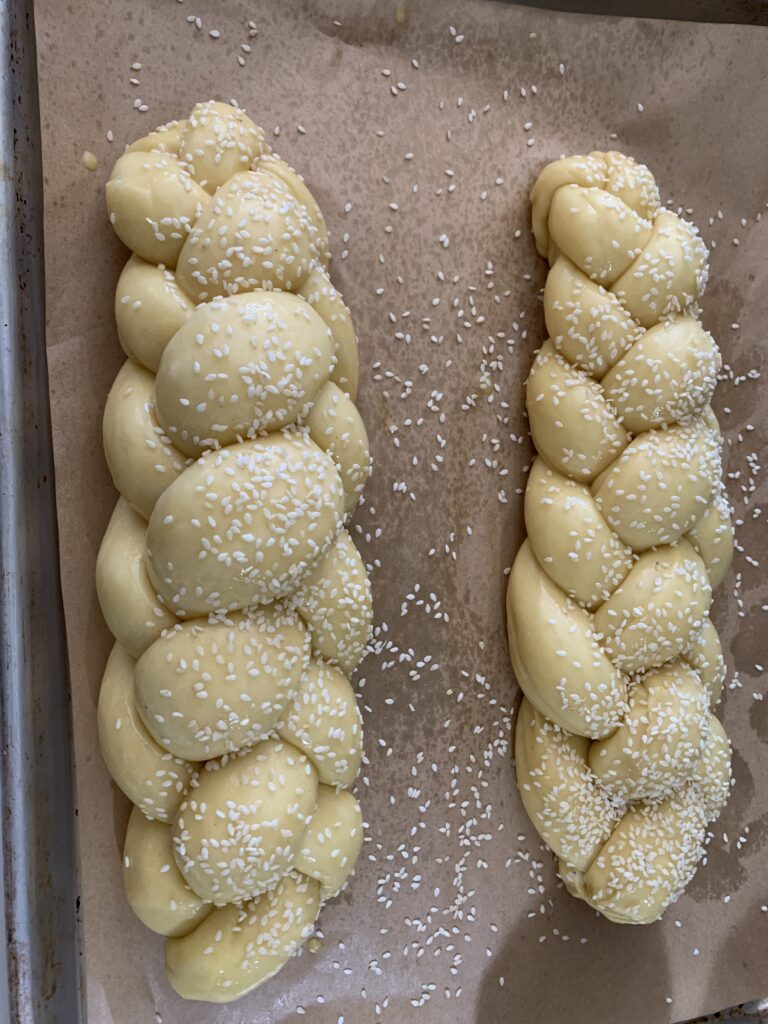
    One of the nicest things about this cookbook is the chapter on braiding and shaping. In it, you’ll find pages and pages of detailed illustrations and directions. I’ve chosen to stick to four-strand braided challahs on this website, so I can compare the breads across recipes, but this cookbook offers two different four-strand versions. One is what they call a high strand, the other is low. I couldn’t decide which one to do…so I did both.

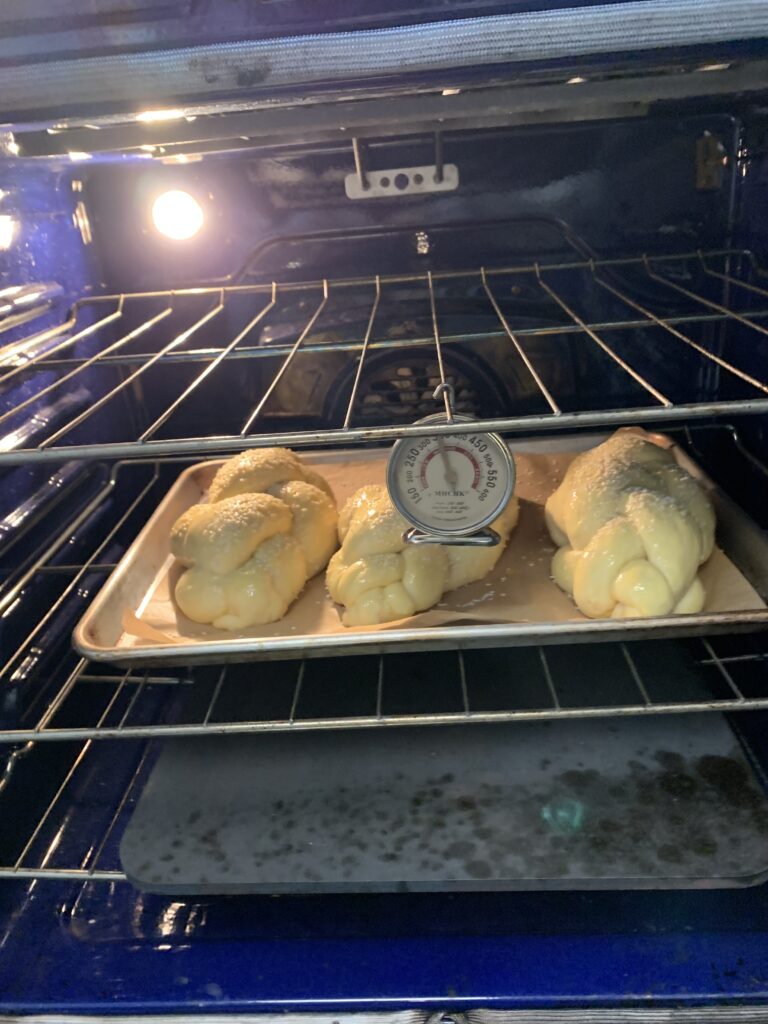
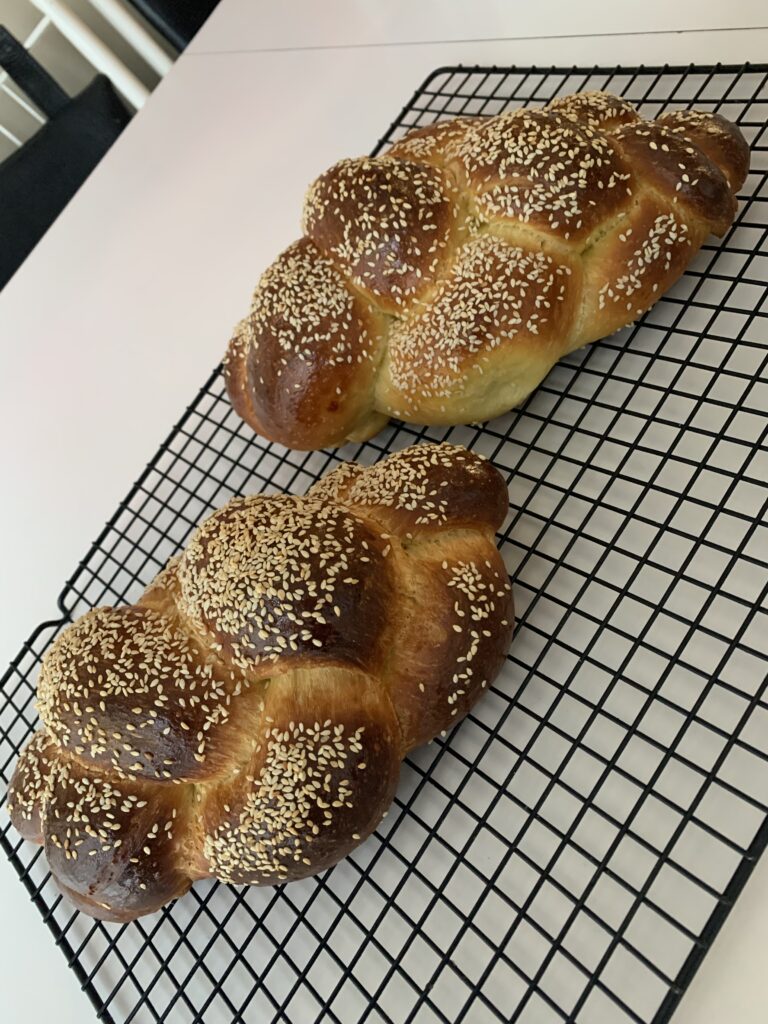
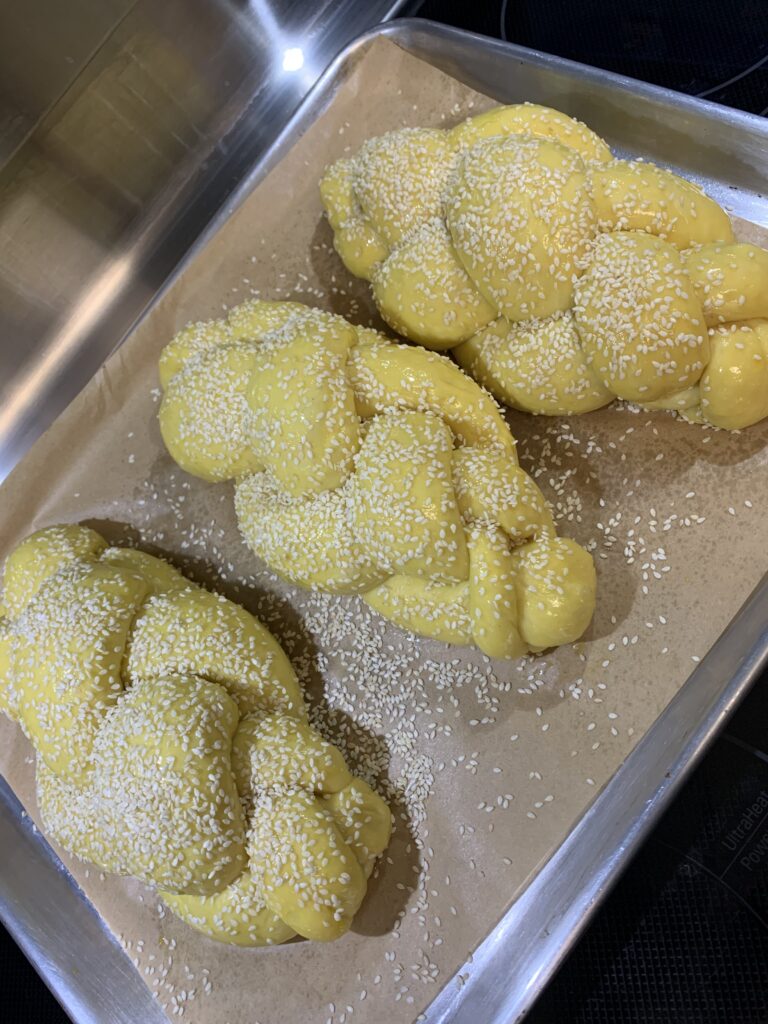
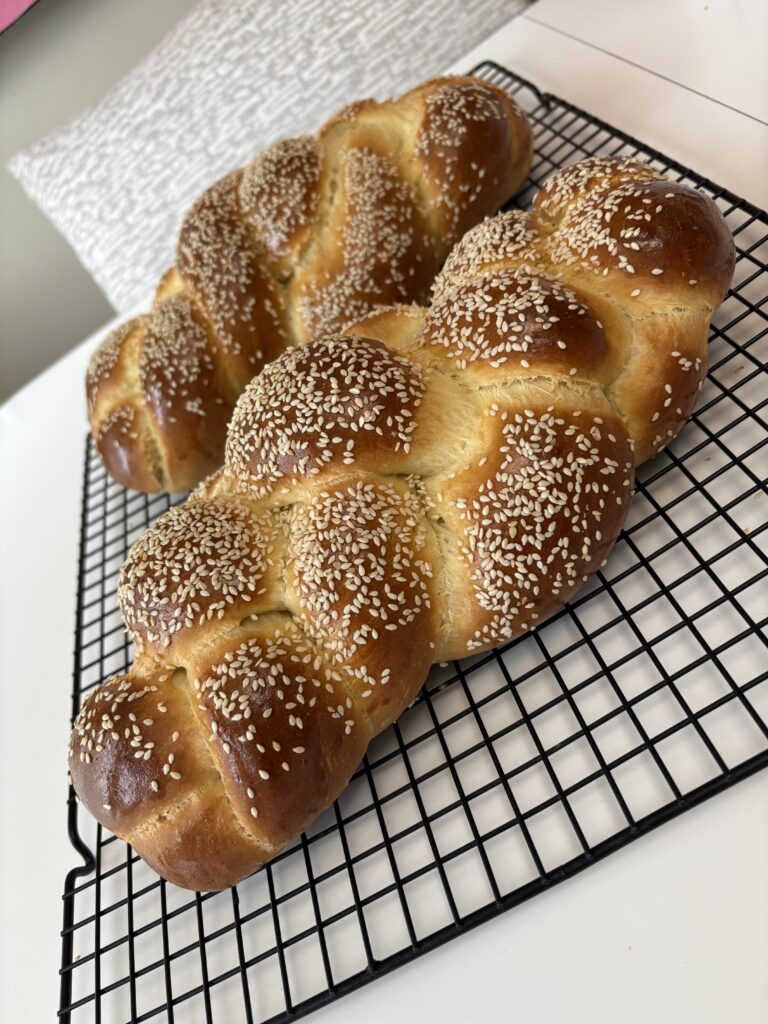
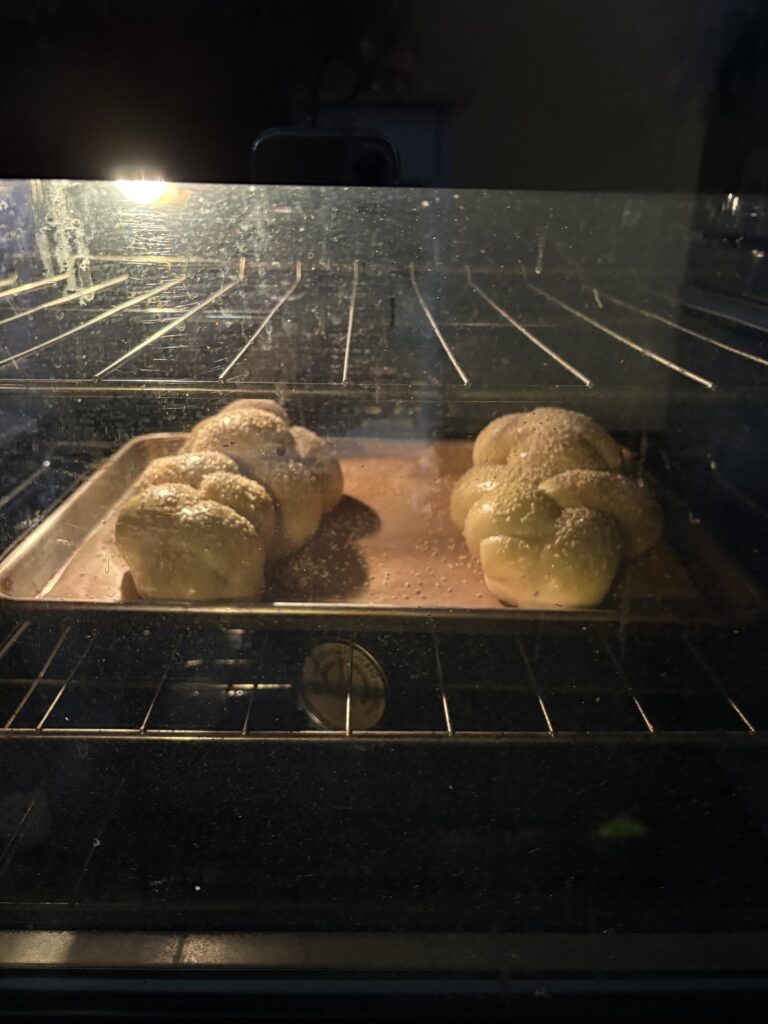
    As you can see from the photos above, both versions came out high so I’m not sure what happened, but I’m here for it. Either way, whichever version you choose, they will come out gorgeous.

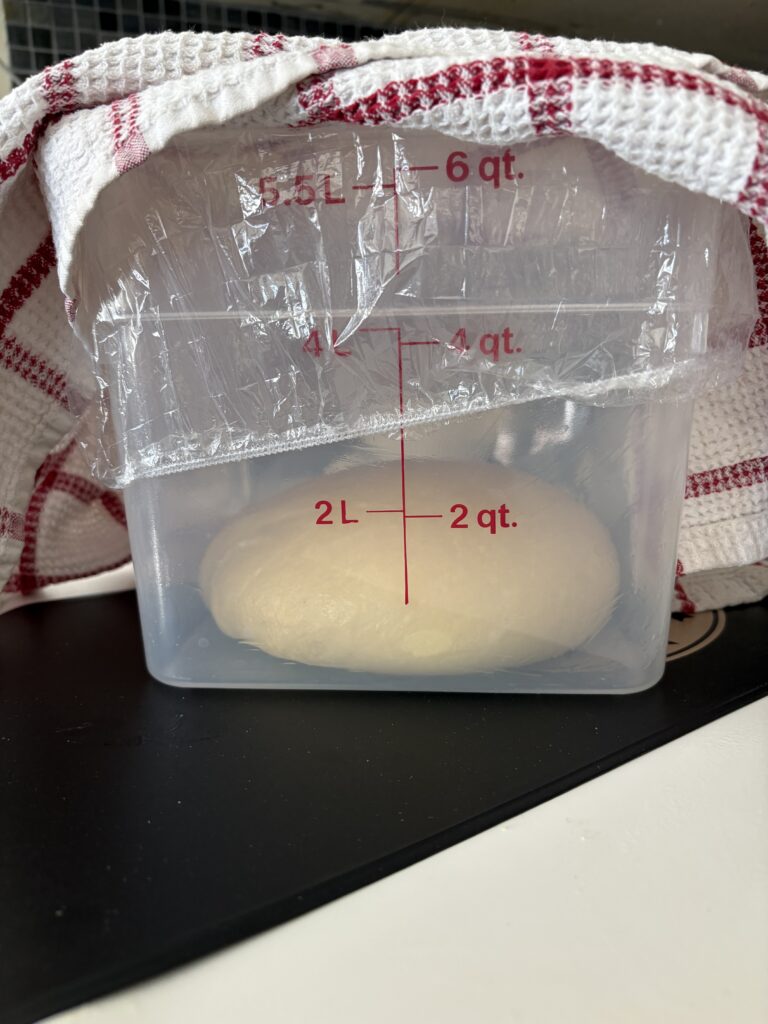
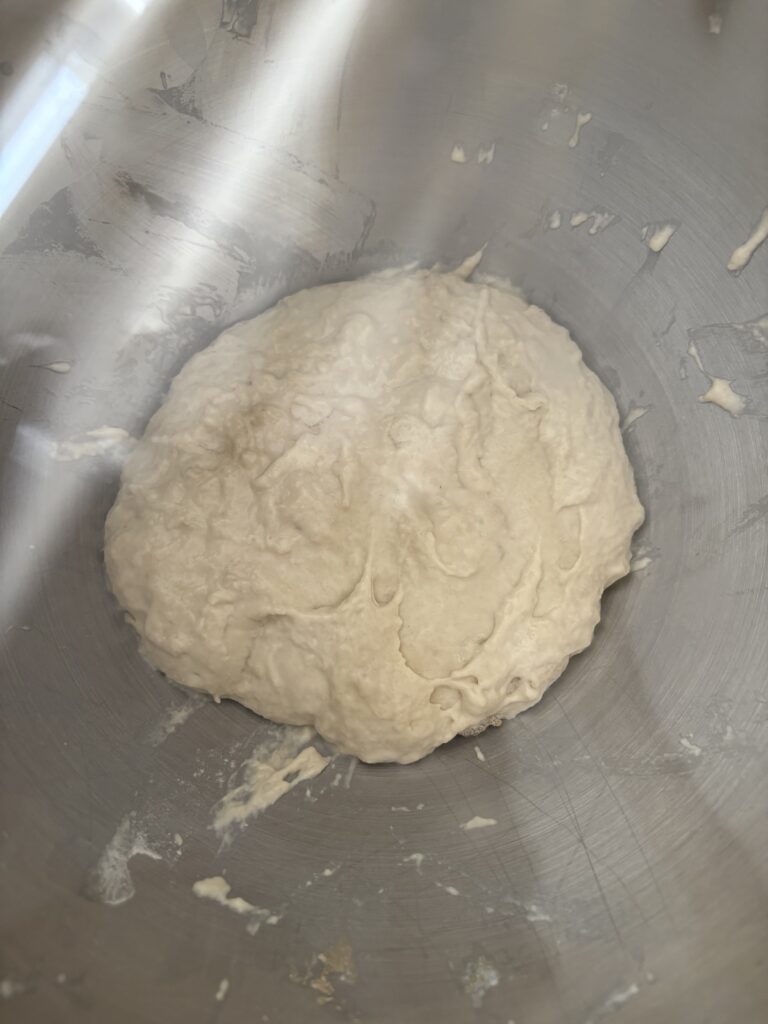
    Strengths: This challah earns top marks for simplicity, even though it includes the extra step of making a sponge preferment. Once the sponge is bubbly, the next steps are straightforward: mix eggs with oil, add egg mixture, mix until smooth, add remaining ingredients, set aside to bulk ferment.

    The final dough had a lovely Play-dough-type texture, albeit a tad more sticky. Rolling out the strands and braiding was easy, too.

    Challenges: Even though directions for this bread are straightforward, the actual steps require a certain finesse. That’s because you are expected to mix the dough sufficiently over a shorter than average period of time. This can be difficult considering the high percentage of yeast, sugar, and fat. Add to that a short bulk fermentation time, and you catch my drift.

    Doughs made with a lot of fat and sugar are hard to mix properly, because these ingredients are heavy. The added weight makes it difficult to properly blend it evenly with the lighter ingredients. This unevenness can lead to a poorly mixed dough, which results in a dense bread.

    Additionally, this is an extremely rich dough at 15% fat. One of the richest enriched doughs is a brioche, which usually starts at 20%. When fat and sugar are high in a dough, proper mixing, fermentation, and baking can be tricky. But, man, if you can do it– wow–you won’t regret it! The bread will melt in your mouth.

    The Science

    As you can see from the photos above, the braids pulled apart quite a bit during baking. This may be one of the biggest challenges challah bakers face. Why do our carefully crafted braids split, and how can we stop that from happening?

    Well, the answer to that is…it depends.

    Braids split when dough is under-kneaded, over-kneaded, has a weak gluten structure, has too much sugar, was shaped improperly, was under-proofed, over-proofed, or simply placed into a super hot oven…or a combination of some or all of these.

    When trying to figure out the cause, I find it helpful to go through a process of elimination. After going through the list for this bake , I’m thinking their were four contributing factors.

    First, this dough has a lot of sugar, and too much sugar can inhibit yeast development. Now, this doesn’t mean the bread won’t rise at all, it just means everything else has to go right for it to happen, and clearly that wasn’t the case here.

    Another issue may be the short kneading window. As I mentioned earlier, sugar, eggs and oil are heavy ingredients. They have to be mixed thoroughly to build strong gluten strands. Add to that the short fermentation window, which also helps to strengthen gluten, and, on top of that, that the fermentation took place in a cool room…well, you get it.

    Breads with sugar and commercial yeast kick start gas production. It’s the gases encased in gluten that gives your loaf lift. When the mixing time is short, you run the risk of the gluten strands not fully developing in time to trap the gases.

    Add to that, the placement of the dough in a super hot oven, causing a natural burst of yeast energy, also known as oven-spring, and the whole thing may have been more than the weak gluten strands could handle.

    The next time I make this bread, I will make several changes.

    First, I will reduce the amount of sugar, primarily because it was too sweet for my liking, but also because all that sugar slows or, at very high levels, crushes yeast activity. A better option for those who like it sweet is to add honey, date syrup or sugar to the egg wash. If you go this route, keep a close eye on it in the oven, because it can burn easily. If the crust gets too dark, cover it loosely with foil or place a sheet pan on the rack above it.

    Next, and most importantly, I will cold ferment the dough in the fridge overnight. That might give the gluten a chance to catch up.

    Adapted Recipe

    Yield: Two medium, 4-strand braided loaves.

    Mix Method: Improved mix; with a short-acting sponge preferment.

    WeightIngredientBaker’s %
    790 g (5.3/4 c)Bread flour (split: 225 g + 565 g)100%
    225 g (1 c)Water29%
    14 g (3.1/2 tsp)Instant yeast2%
    150 g (3 large)Eggs19%
    18 g (1 large)Egg yolk2%
    155 g (3/4 c)Sugar, granulated19.6%
    14 g (2.1/4 tsp)Salt, fine table2%
    100 g (1/2 c)Oil, vegetable13%

    Directions:

    1. With the paddle attachment, mix 225 grams of flour with all of the yeast and water in the recipe. Cover with plastic wrap and leave in a warm place for 30-45 minutes, or until the mixture becomes puffy and filled with bubbles (the sponge).
    2. Whisk the eggs and oil in a separate bowl. Add to the sponge and mix using the paddle attachment until smooth.
    3. With the mixer running on low, gradually add the remaining dry ingredients (565 g flour, sugar and salt). Once the flour is hydrated (no dry bits left at the bottom), switch the attachment to the dough hook and mix on KA2 or a moderately low speed for 6-8 minutes until the dough is smooth and glossy.
    4. Turn dough out onto your bench, round up to create a smooth outer surface and place in a greased bowl to ferment for 60-90 minutes or until it doubles in size.
    5. Separate the ball into 8 pieces, roll up into a ball or thick strand. Cover and allow the gluten to relax, 20-30 minutes.
    6. Shape the braids, cover with plastic and allow to triple in size or rest until a finger poked into the loaf remains indented.
    7. Brush with egg wash, sprinkle with poppy or sesame seeds, and bake at 350 degrees F for 30-40 minutes, turning the loaves after 20 minutes. If the loaves are browning too quickly, tent them with foil. When they reach an internal temperature of 190°F, minimum, remove them from the oven and place on a wire rack to cool.

    While Inside the Jewish Bakery is no longer in print, I encourage you to scour used book stores and your local library for a copy. It’s a fascinating walk down memory lane. If you can’t find a copy, the Sweet & Rich Challah recipe is available online.

    Scoring

    Ease: 7/10

    Taste: 7/10

    Texture: 8/10

    Appearance: 8/10

    Overall: 7.5/10
  • Maggie’s Challah

    The Art

    I’ve been a fan of two-time James Beard award winner and bread baker extraordinaire Maggie Glezer for a long time. Her second cookbook, A Blessing of Bread, is filled with fascinating and meticulously researched recipes, backgrounds and traditions for Jewish breads from around the world. If you love challah, don’t miss the chapter on the history of challah (mini-spoiler alert: this special bread was adapted from German Sunday breads, sometime in the 15th century).

    While challah is the clear star of this landmark work, which lists a whopping 16 versions (some old, some new, and some with sourdough starter), Maggie covers other Jewish breads, too.

    If you’re looking for a challah cookbook with detailed illustrations, and step-by-step instructions on how to shape 2-, 3-, 4-, 5-, 6-strand braids, rounds, and rolls, this is the book for you. But be forewarned, A Blessing of Bread is out-of-print. That said, if you dig deep enough you may come across one at a used book store or your local library. I found one at the Toronto Public Library.

    In the search for my beloved late bubbe’s challah recipe, I chose to test four of Maggie’s breads: Apple Challah; Doris Koplin’s Sweet Challah; My Challah (which is actually sweeter than Doris’s, go figure); and, Anna Gapany’s Lithuanian Challah–the prototype for the Israeli egg less, more savory version, available in nearly every bakery in that country, as well as many in North America and Europe.

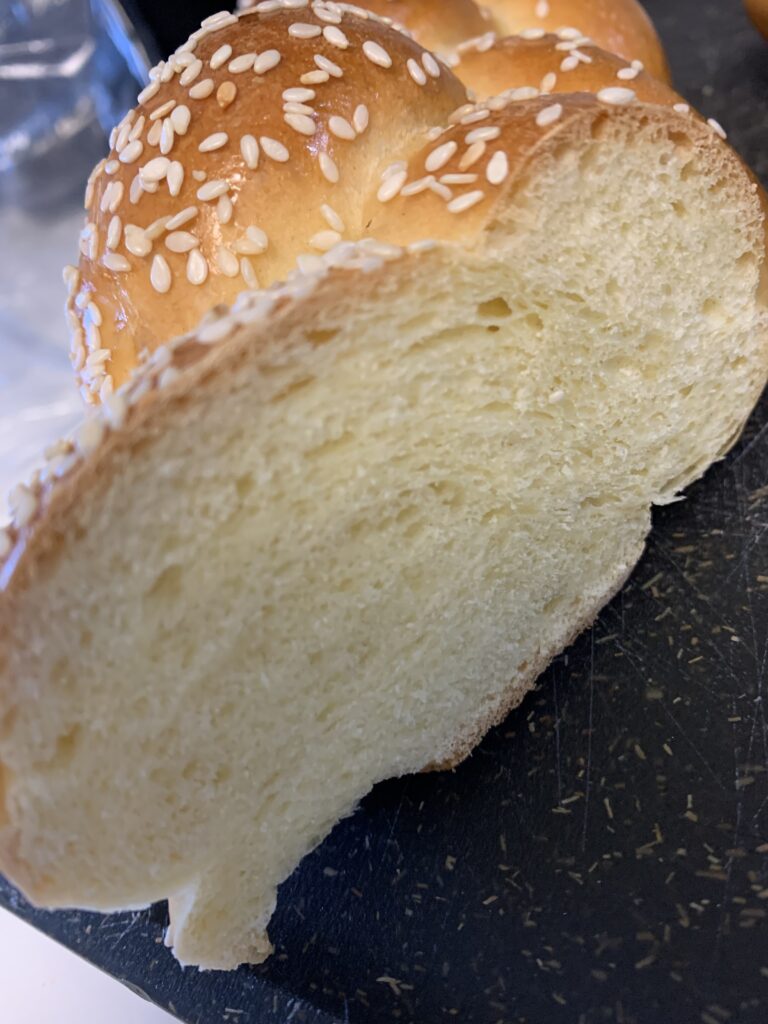
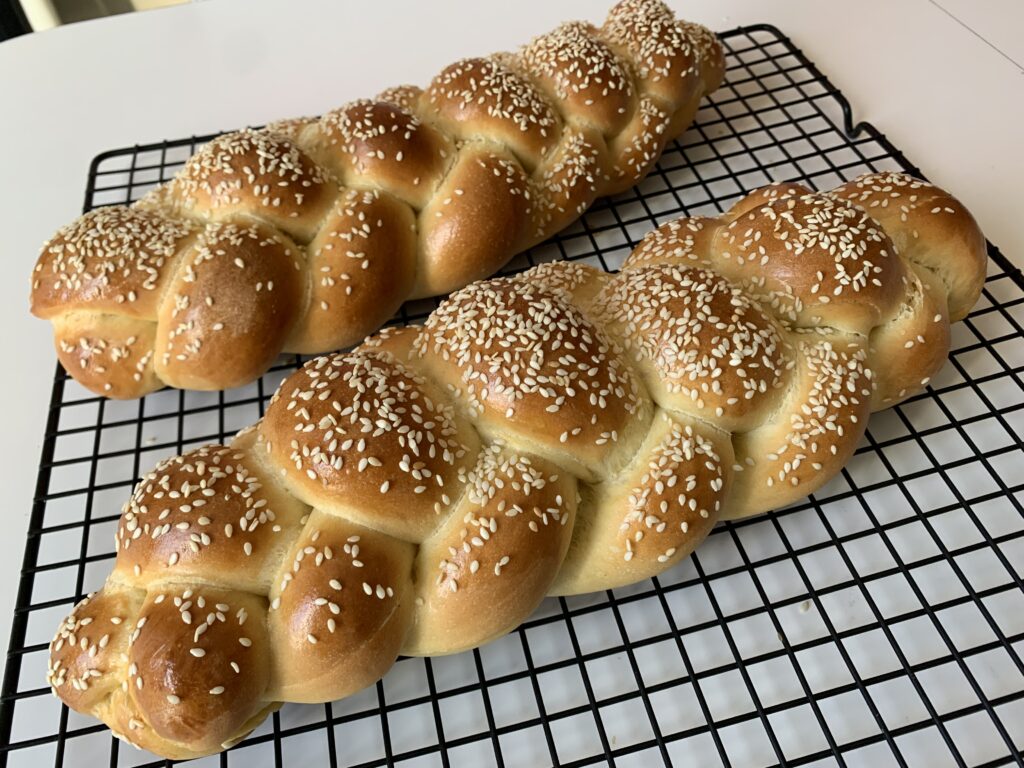
    Strengths: This challah earns top marks for easy mixing, good taste, easy shaping, and a beautiful lemony yellow crumb. If you’re intimidated by the thought of kneading dough from beginning to end, give this dough a try. It’s a dry dough, and at 860 grams total weight for two loaves, the size is quite manageable.

    Challenges: I used my stand mixer for this bread instead of kneading by hand, because, let’s face it, nothing mixes dough better than a machine, although, depending on the recipe, it is possible to over mix (and that’s bad!).

    Knowing this, I set my mixer with the dough hook to low (KA 2) to start. At the one minute mark, the dough was still too dry, so I added 15 grams of water, or just enough to moisten the dry bits, but that didn’t seem to help. Disappointingly, it kept tearing. After several minutes, I changed over to kneading it by hand. Still the bread tore easily. Knowing this was an improved mix method dough, I decided to cover it with plastic wrap and allow the gluten to develop on its own. More on that in the next section.

    The Science

    Alarm bells went off in my head when I saw how low the hydration was for this bread. Even if you include the water in the three egg whites and the 60 grams (1/4 cup) of water in the yeast slurry, it is an extremely dry dough at 36.3% hydration. It might be the lowest of all the challahs in my collection.

    Sometimes you can get away with a lower hydration dough, especially when you include a preferment or autolyse (pronounced “auto-lease”), which is an efficient way of hydrating flour to get a jump-start on gluten development. Additionally, it makes the dough more malleable, and extendable without using a lot of water. Contrary to popular belief, adding too much water can result in a tougher bread crumb.

    So, at the end of the day, the dough that started out dry ended up even dryer, most likely from baking the loaves at 325°F for an extended amount of time. That temperature is very low for a challah made with sugar. Now, if the challah was a large, round loaf, sweetened with honey, this would have been the best temperature. That’s because honey burns easily.

    If I were to make this recipe again, I would make several changes. First, I’d use honey instead of sugar. Honey has more fructose than sugar. It’s more hygroscopic, meaning it absorbs more moisture. And, depending on the brand, honey is 17% water, just enough to add more moisture. Secondly, I won’t use a mixer next time. A slower knead and longer proofing time would have encouraged the gluten strands to connect better, ultimately making it stronger. Thirdly, because this is such a dry dough, I think it would have benefitted more from proofing it in a greased container to lock in the moisture. I like to lightly spray my shaped loaves with oil during the final proof to reduce the loss of moisture even further.

    Adapted Recipe

    Yield: Two medium, 4-strand braided loaves.

    Mix Method: Improved mix; with a short-acting sponge preferment.

    WeightIngredientBaker’s %
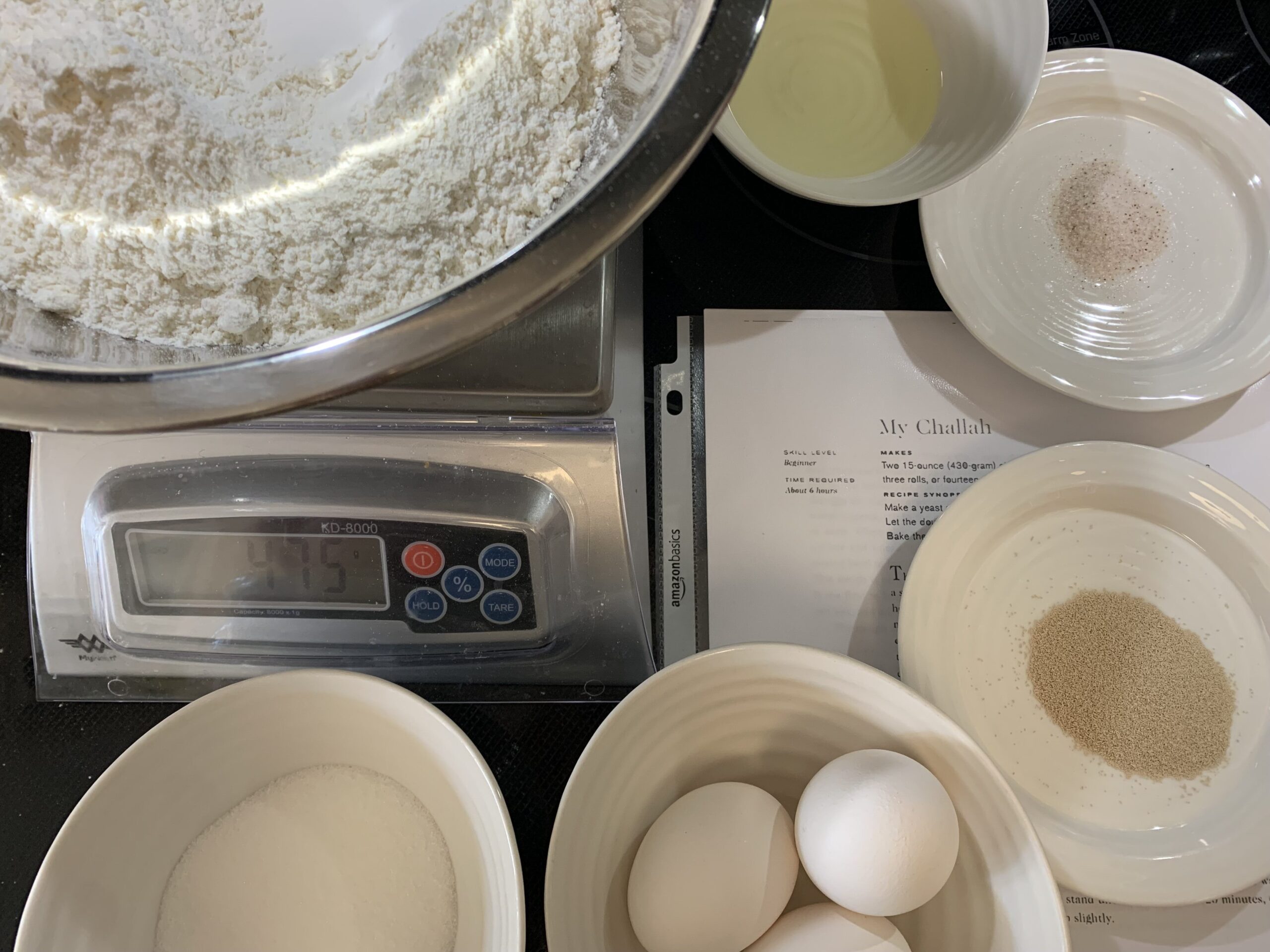
    475 g (3.1/2 c)All purpose flour100%
    60 g (1/4 c)Water12.6%
    6 g (2 tsp)Instant yeast1.3%
    150 g (3 large)Eggs31.6%
    70 g (2.4 oz)Sugar, granulated11%
    8 g (1.1/2 tsp)Salt, fine table1.7%
    55 g (1/4 c)Oil, vegetable11.6%
    Total dough weight: 860 g / Total hydration, including eggs: 36.3% / Total fat, including eggs: 14.4%

    Directions:

    1. Make a slurry by whisking the full 6 grams of yeast with 30 grams (1/4 cup) of the flour, then whisk in the 60 grams (1/4 cup) of warm water until smooth. Let stand uncovered for 10-20 minutes, or until it begins to puff up (ferment).
    2. In a separate bowl, whisk together the 3 eggs, salt, oil and honey (use the same container as you did to measure the oil so it comes out easily) or use sugar instead of honey. With your hands or a wooden spoon, stir the egg mixture and yeast slurry until the eggs are well incorporated and the salt has dissolved.
    3. Pour the remaining flour into the yeast and egg mixture, continuing to mix with your hands or wooden spoon until the dough comes together in a shaggy ball. Scrape the dough out onto your work space and knead until it is smooth, no more than 5 minutes. If the dough is too firm at any point, add a tablespoon or two of water. If it’s too wet, add a tablespoon or two of flour.
    4. Place the smooth dough in a bowl and cover with plastic wrap to bulk ferment. You can refrigerate the dough overnight or allow it to rest covered at room temperature until it has doubled in size, about 2 hours. (If the dough has been refrigerated or your room is cold it may take an extra 30-60 minutes to finish fermenting).
    5. Once doubled, separate the dough into two 430-gram portions or one 680-gram portion for a large loaf and three smaller pieces to make rolls. Braid or shape the dough as desired, then place the shaped dough on one or two parchment-lined sheet trays. Cover with plastic wrap or an unscented plastic bag. At this point, you can keep place them in the fridge for up to 24 hours or allow them to proof in a warm spot at room temperature until they have tripled in size, about 2-3 hours.
    6. Preheat your oven to 325°F for loaves, and 350°F for rolls. Prepare the egg wash by beating the remaining egg with a pinch of salt, and place this aside to glaze the breads before baking.
    7. When the loaves have tripled in size and do not come back after gently pressing down with your finger, but remain indented, brush them with the egg wash before placing them in the oven. Bake rolls for 15-20 minutes. Bake the 430 gram loaves for 25-30 minutes, or bake the 680 gram loaf for 35 to 45 minutes. If the large loaf is browning too quickly, tent it will foil. When the loaves reach an internal temperature of 190°F, minimum, remove them from the oven and place on a wire rack to cool.

    You will find a bare bones version of Maggie’s “My Challah” recipe on the New York Times website. If you have trouble accessing it, contact your local library to see if they provide temporary free access.

    Now, if you ever get the opportunity to purchase A Blessing of Bread or borrow it from your library, do it! Even though this particular recipe didn’t work out for me (this time?), her book is one of my prized possessions. I cannot think of another book on Jewish bread baking with this level of detail, background and recipes.

  • Joan’s Favourite Challah

    The Art

    Joan Nathan is known to many as the Queen of Challah. She published her favourite version of the recipe in the New York Times, in 2001. Today, nearly 25 years later, it’s still one of the most popular destinations on their website, and for good reason.

    Interesting Fact: Joan was one of the first popular challah bakers to recommend proofing the dough three times, with the second one preferably overnight in the fridge. It’s this long, cold proof that contributes so much to the rich flavour of her bread. If you have the fridge real estate and time, I strongly recommend it.

    Strengths: This dough makes a fabulous bread. It’s rich, eggy, sweet, and fluffy. It’s the perfect loaf for a Shabbat blessing, or other special occasion. With hundreds of challah recipes on the web to choose from, you can’t go wrong with this beauty. It’s a one-bowl dough, with no fancy extra steps.

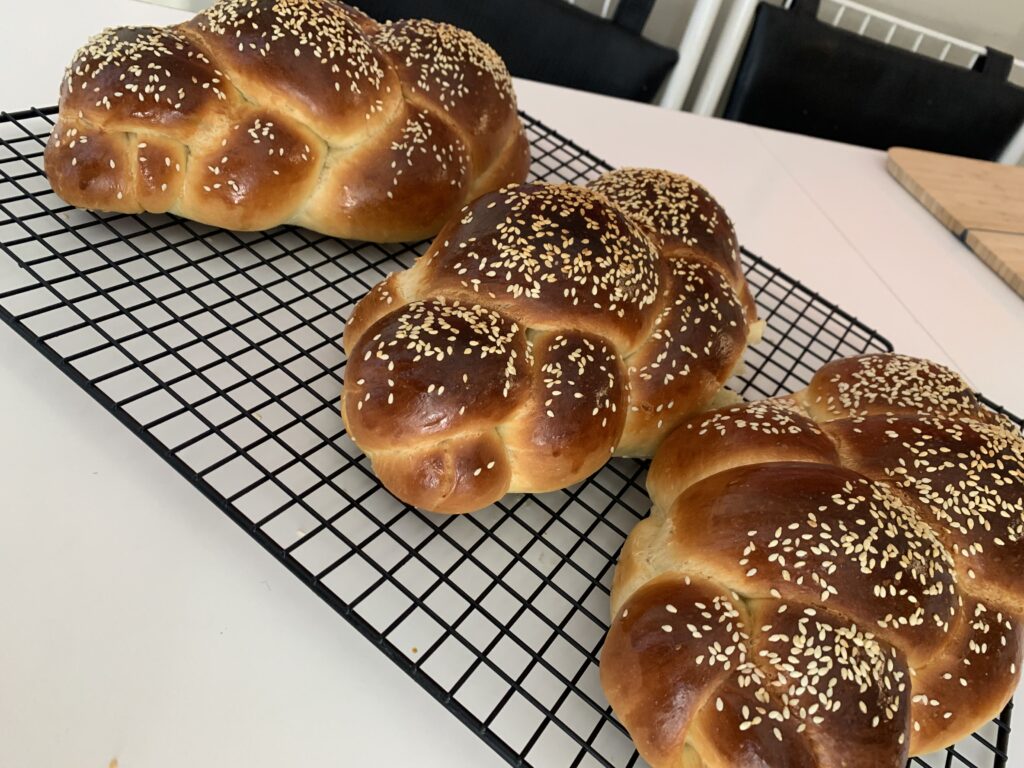
    Challenges: My family loved this challah; however, I did have several challenges when making it. Joan likes her challah dark, and I prefer mine light. As you can see from the photos, above, mine came out quite dark. Another challenge was timing. It took my challahs twice as long to proof. Instead of the suggested 2.1/2 hours at room temperature, they took 5 hours. Luckily, I started early in the day!

    Finally, this is a very sticky dough. I ended up using all of the flour in the recipe because it was rather wet at the one minute mixing mark, and, still, with all that added flour the finished dough ended up quite sticky. Sticky dough isn’t bad, per se, in fact, it usually makes for a light fluffy bread; however, it is hard to handle for most bakers, and it’s particularly tricky for beginners.

    The Science

    Challah is an enriched dough. The added eggs, sugar and oil naturally inhibit yeast development, making for a slow rise. Some people overcome this by adding more yeast, but too much can lead to unpleasant tasting bread. Proofing the dough overnight in your fridge is another solution, as Joan suggests. The cold temperature slows down yeast activity, giving the gluten a chance to catch up and get stronger, thus encasing those wonderful gases.

    Another option is to extend the proofing time, as I did, but keep a close eye on it to make sure it doesn’t over-proof. That can lead to a flat, dense bread. Do the poke test often to stay on top of it.

    Finally, if your kitchen is on the cool side, place the dough in a warmer location (a friend puts her dough in her boiler room!). Sometimes the gluten isn’t the problem. Sometimes the yeast is too cold to activate properly. The Desired Dough Temperature that is optimal for proper fermentation in enriched dough is about 75 degrees F.

    How to lighten a dark crust: The Maillard Effect in baking is a chemical reaction that occurs when sugars (white, brown, honey, lactose, etc.) and proteins (amino acids) are heated, causing the surface to brown. If you prefer a lighter crust, there are a couple of ways to achieve this. When you see the bread is browning too quickly in the oven, cover it loosely with foil or place an empty sheet tray above it. Either way, you will reduce the heat exposure by shielding the top of the bread, and that can help a lot. Lastly, you can reduce the oven temperature, but be careful. If the temperature is too low, the bread will take longer to bake, and that extra time in a hot oven may dry it out significantly.

    How to handle sticky dough: Most people choose to add more flour to sticky dough, but too much flour can change the composition of the dough, giving you a dense finished product. Perhaps, the best way to work with sticky dough is to have fast hands. That means to keep the dough moving, quickly. Another hack is to wet or lightly grease your hands.. Dough scrapers help, too. If you’re not comfortable with any of these methods, cover the dough tightly with plastic wrap, and place it in the fridge for an hour or two to chill, then try again. Many people don’t give it much thought but once you mix flour and water, the gluten develops on its own. Still, you will get better, quicker and more consistent results if you knead it either by hand or in a mixer.

    Adapted Recipe*

    Yield: Two large or three medium loaves.

    Mix Method: Intensive mix; straight dough (no preferment).

    WeightIngredientBaker’s %
    960 g – 1020 g (8-8.1/2 c)All purpose flour100%
    420 g (1.3/4 c)Water41.2%
    10 g (1.1/2 pkg)Instant yeast1%
    200 g (4 large)Eggs, large19.6%
    112.5 g (1/2 c + 1 tbsp)Sugar, granulated11%
    17 g (1 tbsp)Salt, fine table1.7%
    120 g (1/2 c)Oil, vegetable11.8%
    Total dough: 1899.5 g / Total hydration, including eggs: 55.9% / Total fat, including eggs: 13.5%
    *Adapted to include metric weights and instant yeast

    Directions:

    1. Make a slurry by whisking the yeast with 1 tbsp sugar and 420 grams warm water in the bowl of a stand mixer.
    2. Whisk the oil into the slurry, then beat in the four eggs, the remaining sugar and salt. Switching to the dough hook, on speed 1 (KA sift), gradually add the flour until the dough comes together, then scrape down the bowl. Slowly increase to speed 2 (KA 4) and knead until the dough is smooth and elastic, about 8-12 minutes.
    3. Cover the dough with plastic wrap and allow it to rise in a warm place until it’s nearly doubled in size, about one hour. Gently degas the dough, cover again, and allow it to rise for another 30 minutes.
    4. Braid or coil the challahs, then brush the tops of the loaves with a well-beaten egg. Allow the dough to rise for one more hour. Preheat the oven to 375 degrees F.
    5. Brush loaves one more time and then bake in the middle of the oven for 35 to 40 minutes, or until an instant read thermometer in the centre of the bread reaches 190 degrees F.
    6. Remove from the oven and place on a wire rack to cool.

    I highly recommend you check out Joan’s original recipe. If you have trouble accessing the New York Times online, contact your local library. Oftentimes, they offer free temporary access either online or in the branch.

  • Jeffrey’s Challah

    This was one of the first breads I made on my journey to recreate my late bubbe Stella’s z”l challah, and while it didn’t exactly meet the mark, it turned out to be a fantastic bread, and the perfect receptacle for a late night grilled cheese or Sunday morning French toast casserole.

    Pros: The director of the King Arthur Flour Bakery, Jeffrey Hamelman has developed a fantastic dough for the first-time bread baker. Whether you choose to knead it by hand or with a stand mixer, it’s a super firm, elastic dough that will allow you to practice making the most beautiful strands and braids with ease. My one word of caution is if you’re using a mixer, use the dough hook on a slow speed, and give your motor several breaks to cool down. And no matter which braid style you choose, you’ll be amazed at how gorgeous it comes out, with zero pulling or splitting.

    Cons: I proofed this bread in the fridge overnight and after an hour I noticed the surface was dry. That dryness is a no-no for challah. It can inhibit proper rising and result in a tough, leathery crust. So, while the recipe does not call for it, I sprayed oil on top of the dough for the remainder of the time it was in the fridge, and that helped a lot.

    Some people love their challahs to have a dense crumb and dark crust. If that’s you, follow the recipe to a tee. If you’re more like me and prefer a golden crust, cover it loosely with foil after the first few minutes in the oven, or place a sheet tray on the oven rack above. You can also lower the oven temp by 25 degrees as soon as you place the challah in the oven, but keep an eye on it. Every oven is different, and most will have large temperature fluctuations so it could go down too much, causing it to dry out even more.

    Adapted Recipe

    WeightIngredientBaker’s %
    930 g (1/3 c)All purpose flour100%
    302 g (1 1/3 c)Water32.5%
    17 g (1 tbsp + 2.1/2 tsp)Instant yeast1.8%
    150 g (3 large)Eggs, large16.1%
    54 g (3 large)Egg yolks, large5.8%
    99 g (1/2 c)Sugar, granulated10.6%
    18 g (1 tbsp)Salt, fine table1.9%
    66 g (1/3 c)Oil, vegetable7.1%
    Total dough: 1636 g / Total hydration, including eggs: 47.5% / Total fat, including eggs: 10.3%

    Directions

    1. Place all of the ingredients in the mixing bowl of a stand mixer, starting with the liquids and ending with the dry. Make sure not to put the salt and yeast too close to each other.
    2. Knead the dough on speed 1 (KA 1) for 5 minutes, stop the machine and let the dough rest for 5 minutes to allow your mixer to cool down, then continue on KA 2 for 3-5 minutes or until the dough is smooth, well-developed and passes the windowpane test.
    3. Cover the bowl with plastic wrap and allow to rise at room temperature for one hour, then place in the fridge for another hour or until it is thoroughly chilled.
    4. Remove from the fridge and transfer to a lightly greased work surface. To make two 4-strand braided challahs, separate the dough into eight pieces of equally weighted dough. Pre-shape each piece into a log, careful to keep the smooth side of the dough on the outside.
    5. Cover the logs and allow them to rest for 15-20 minutes.
    6. Uncover the logs and roll each strand to approximately 20″ each, making sure to taper the ends. To make a 4-strand braid, join the strands together at the top by pressing the ends together. Now, assign all four braids a number and move #4 over #2, then #1 over #3, then #2 over #3 and repeat. Once you’ve finished braiding, press down the ends together, flip to the bottom, and give the whole loaf a couple of rolls.
    7. Place both challahs on a parchment-lined baking sheet and cover with plastic (I use fragrance-free recycling bin bags) and allow to proof until they’re doubled in size, about 1.1/2 to 2 hours, but your kitchen climate may be different than mine so remember to do the poke test to double check. Towards the end of the proofing time, preheat your oven to 375*F.
    8. Bake the loaves for 25-30 minutes or until they reach an internal temperature of 190*F using a digital thermometer. Remove from oven and place on a wire rack to cool.

    If you’re interested in learning more from the master himself, get the full recipe and watch him make the challah in real time here.